Everything You Need to Know About St George Louisiana
St. George, Louisiana, is the newest city in the Greater Baton Rouge area, formed by a portion of unincorporated East Baton Rouge Parish. This move, driven by a desire for local control over schools and services, will significantly impact homeowners, homebuyers, and the region's overall landscape. It promises potential for better schools and more localized governance, but also presents a transition period for public services.
Are you thinking about moving to Baton Rouge, Louisiana? As a local real estate agent who has helped countless people relocate to this vibrant state, I can tell you that understanding the local landscape is crucial—and right now, that includes knowing about Louisiana's newest city: St. George. After years of debate and legal battles, this significant portion of what was formerly unincorporated Baton Rouge has officially become its own municipality.
My experience working with buyers and sellers across the Greater Baton Rouge area has shown me that local governance and school districts are often top priorities. The formation of St. George is a game-changer, impacting everything from local taxes and city services to property values and school choices. I've seen firsthand how changes like these can influence a family's decision, and it's essential to have the most up-to-date information.
In this comprehensive guide, I'll break down everything you need to know about St. George, Louisiana. We'll explore its history, geographical boundaries, the implications for schools and city services, and what this means for anyone considering living in Baton Rouge or its surrounding areas. Let's dive into the details.
Understanding the Formation of St. George, Louisiana
The idea of St. George breaking off from East Baton Rouge Parish isn't new; it's a movement that has been over a decade in the making. Initially, the focus wasn't on forming a new city but on creating an independent school district. After multiple attempts to gain state legislature approval for a separate school district failed, organizers shifted their strategy in 2015 towards full incorporation to form their own city.
This shift aimed to give residents more local control over critical aspects like government, zoning, and, most importantly for many, education. While an initial petition in 2015 fell short of signatures, a renewed effort in October 2018 for a slightly smaller version of St. George succeeded. In 2019, the measure was put to a vote, with 54% of people voting in favor of incorporation. However, the journey was far from over, as Baton Rouge city officials immediately challenged the results in court, leading to years of lawsuits and appeals. Finally, in 2024, the Louisiana Supreme Court ruled in favor of the incorporation, officially establishing St. George as Louisiana's newest city.
What Areas Does St. George Cover?
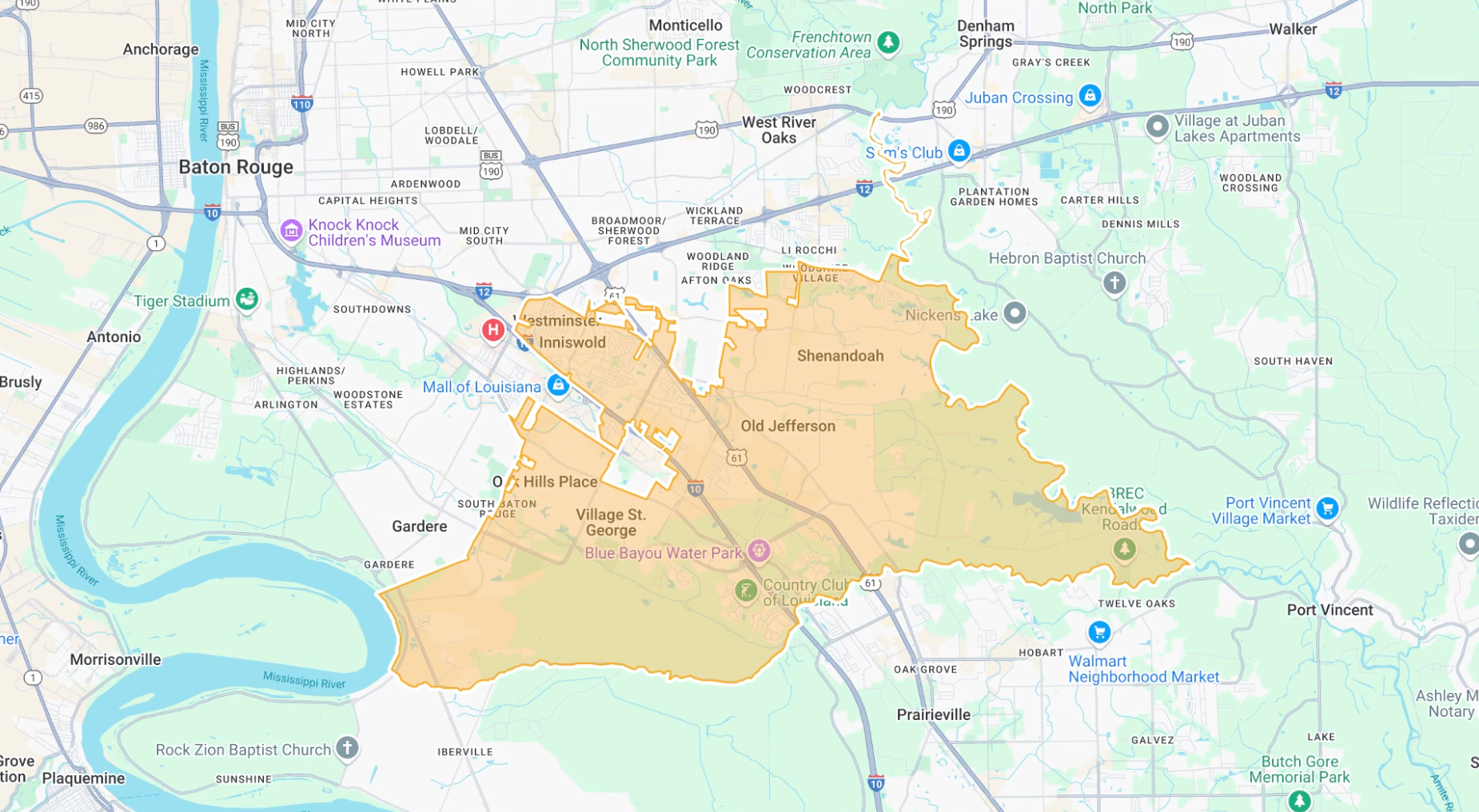
The geographical boundaries of St. George evolved significantly throughout the incorporation process. Early proposals were much larger, but key commercial areas like the Mall of Louisiana and Siegen Marketplace were annexed by Baton Rouge to ensure they remained within its jurisdiction. The final boundaries encompass a substantial portion of Southeastern East Baton Rouge Parish, covering approximately 60,000 residents.
If you're looking at a map, St. George stretches from Perkins Road down to Highland Road and Airline Highway. This area includes a large segment of what was previously unincorporated Baton Rouge. It's now larger than Baker and Central combined, indicating its significant size and population. Notable neighborhoods within St. George include Oak Hills, Highland Lakes, Village St. George, and even the Country Club of Louisiana. It also encompasses areas like Westminster, Inniswold, much of Old Jefferson, and Shenandoah, running south until you reach Prairieville. These areas are popular with my clients, especially South Baton Rouge and the Shenandoah area. Many medical workers find this area particularly attractive due to the hospitals located within its new boundaries.
The Impact on Baton Rouge Housing Market Value and Addresses
One practical change for residents and real estate professionals like myself is the shift in addresses. Our MLS systems are already in the process of converting these former Baton Rouge addresses to St. George addresses. If you have questions about specific boundaries or whether a particular house falls into St. George or Baton Rouge, I'm here to help navigate those details. This change is certainly a factor for anyone considering their next move, as it redefines what many have traditionally considered part of the Baton Rouge housing market.
Governance and City Services in the New City
As a brand-new city, St. George is currently in a transitional phase regarding its leadership. The governor has appointed interim city officials, including a mayor, chief of police, and city council members. These interim leaders will serve until residents can hold elections to vote on permanent leadership. This initial setup ensures that essential services can begin to be established while the city prepares for its first democratic processes.
What Happens with Schools in St. George?
Perhaps the most significant aspect of St. George's formation, and a primary motivator for its supporters, is the plan for education. Much like Zachary and Central did when they incorporated, St. George intends to form its own independent school district. This will give them local control over education funding, class sizes, and resource allocation. However, this process is currently on hold until the city is fully operational. For homeowners and homebuyers, this could be a major draw in the future, especially given that Zachary and Central school districts consistently rank among the best in the state. Better school districts almost invariably lead to higher property values, making it a potentially huge plus for future resale value. To learn more about the broader school situation in the region, you might find 10 Things You Need to Know Before Moving to Baton Rouge Louisiana helpful.
Public Services: Police, Fire, and Infrastructure
With a new city comes the responsibility of establishing its own public services. Things like police, fire, and road maintenance are currently in transition. While supporters believe local control will lead to more effective services, the effectiveness of these new departments compared to Baton Rouge's established services is still to be seen. The development of infrastructure and zoning under St. George's governance is also something to watch closely. This transition period means that residents will be observing how efficiently and effectively these new city departments take shape.
Pros and Cons of Living in Baton Rouge (and now St. George)
When considering living in Baton Rouge or its surrounding areas, it's always important to weigh the good with the challenging. Here's a quick look at some general pros and cons that apply to the broader region, now with St. George in the mix.
The Pros of Living in the Greater Baton Rouge Area
- More House for Your Money: Compared to many larger markets across the country, you generally get more house for your money here. Property taxes are reasonable, and the cost of living is lower than the national average. For three or four hundred thousand dollars, you can often find a nice four-bedroom house with a yard. I've helped many clients relocate and they are pleasantly surprised by the value.
- Tight-Knit Communities and Southern Hospitality: There's a distinct small-town vibe even in the larger suburban areas like Denham Springs, Walker, Prairieville, Central, and Zachary. Neighbors are friendly, people help each other out, and there's a strong sense of community. "People will go out of their way to help each other, and we always find reasons to get together," I've observed.
- Job Development and Growth: Baton Rouge is a growing city with opportunities in hospital expansions, refinery and chemical plant expansions, new construction, and small business development. Companies like Exxon are investing hundreds of millions into facilities, and the lower cost of doing business here attracts more growth.
- Access to Weekend Fun: You're only about an hour from New Orleans, offering endless entertainment options. Beaches are about two hours away, and there are plenty of lakes and outdoor activities for fishing, hunting, or enjoying nature. Plus, with Mardi Gras, crawfish, and football seasons, there's always something happening year-round.
- Strong Local Culture: South Louisiana boasts a unique blend of cultures and backgrounds. People take immense pride in being from here, and newcomers are generally welcomed like family. It's a truly unique and vibrant place to live.
The Cons of Living in the Greater Baton Rouge Area
- Insurance Challenges: This has been a growing concern. Flood insurance can be expensive, even in areas that don't typically flood, and it's crucial to know your flood zone. Homeowners insurance has also become pricier, with some companies leaving the state or refusing to write policies in certain zip codes, especially for roofs over 15 years old. However, I have contacts that can help find the best rates; I recently helped a client reduce their flood insurance from $3,500 to $1,600 a year.
- Roads and Infrastructure (Traffic): Traffic can still be a challenge, especially around the Mississippi River Bridge and I-12. While improvements like the College Drive exit project have helped, construction zones are a constant presence. Commuting across the Mississippi River Bridge during peak times can be a nightmare, so I always advise clients to live on the same side of the river as their workplace if possible. You can get more insights on preparing for local weather in How To Handle Hurricanes In Baton Rouge Louisiana (What Homebuyers Need To Know).
- School Quality Can Be Hit or Miss: While districts like Zachary, Central, Ascension Parish, and Livingston Parish are top-notch, other areas can vary. This is a major reason for St. George's formation. Even if you don't have kids, good school districts impact resale value. Baton Rouge offers excellent private and charter schools, and a website like greatschools.com can be a valuable resource for research.
- Crime (Context Matters): Baton Rouge's crime statistics can be unflattering, but it's important to remember that crime is not city-wide. There are very safe pockets and neighborhoods, and it can sometimes be block-to-block. As a realtor, I can't steer clients, but I can share resources to help you research areas and decide what feels safe for you. For a broader overview of relocating to the area, check out The Ultimate Baton Rouge Louisiana Relocation Guide: From Anywhere In The US to Living in Louisiana.
- The Weather is Brutal: Louisiana's heat and humidity are intense for much of the year, and it's something many never truly get used to. Hurricane season is also a factor, though it's often less scary than people imagine, especially if you don't live too far south. While the heat is a con for some, others prefer it over colder weather, allowing for year-round outdoor enjoyment.
Why Did St. George Break Away from Baton Rouge?
Supporters of St. George primarily cite the desire for better schools and more effective city services as the driving forces behind the incorporation. Many residents felt their tax dollars were not being utilized efficiently by Baton Rouge's government, leading to a strong push for greater local control over education, infrastructure, law enforcement, and zoning. They observed that when Zachary and Central formed their own cities, both saw significant improvements in their schools and local services, fueling the belief that St. George could achieve similar success.
However, the formation of St. George has not been without its critics. Some, including national outlets like the Daily Mail, have suggested that the move was racially motivated, aiming to separate wealthier, predominantly white areas from more diverse parts of Baton Rouge. St. George organizers vehemently deny these claims, maintaining that their motivation was purely about improving schools, infrastructure, and achieving self-governance. This debate has persisted for years and will likely continue as St. George establishes itself as an independent city.
What Does St. George Mean for People Moving to Baton Rouge?
If you're considering a move to the Greater Baton Rouge area, St. George presents an attractive new option, but with some evolving considerations:
- Potential for Lower Local Taxes: Depending on how the new city structures its budget, residents could see lower local taxes. This is a key incentive for many who supported the incorporation.
- Better Schools in the Future: If St. George successfully forms its own independent school district, mirroring the success of Zachary and Central, it could become a major draw for families prioritizing education. This could significantly boost property values in the area.
- More Local Control: Residents in St. George should have more direct input on city decisions, fostering a stronger sense of community governance compared to being part of a larger, more sprawling Baton Rouge.
However, there are still questions that need to be answered:
- Effectiveness of Public Services: How quickly and effectively will new public services like police, fire, and road maintenance transition and operate? This is an ongoing process.
- Timeline for School District Formation: Forming a new school district is a complex undertaking. It could take years before St. George's independent school district is fully operational and its impact on education is clearly seen.
- Economic Growth and Business Relocation: The city's long-term economic growth will depend on how it develops and whether businesses choose to relocate or establish themselves within its new boundaries. This will be a key indicator of its success.
Regardless of your perspective, St. George marks one of the most significant local changes in recent history. As a realtor, I believe it's a city worth taking a hard look at if you're considering the Baton Rouge area.
Key Takeaways
- St. George's Formation: Louisiana's newest city, St. George, officially incorporated in 2024 after a decade-long effort, primarily driven by a desire for local control over schools and services.
- Geographic Scope: St. George covers a significant portion of Southeastern East Baton Rouge Parish, encompassing approximately 60,000 residents and popular neighborhoods like Shenandoah and Oak Hills.
- Educational Aspirations: A core goal is to form an independent school district, similar to high-ranking Zachary and Central, which could significantly enhance property values and attract families.
- Transitioning Services: The new city is currently establishing its own local government, police, fire, and infrastructure services, with interim officials in place until elections can be held.
- Real Estate Implications: For homebuyers and homeowners, St. George presents potential for lower local taxes and improved schools, but also a period of transition as new city services and the school district are fully developed.
Frequently Asked Questions (FAQ)
Q: What are the primary reasons St. George formed its own city?
A: The main drivers for St. George's incorporation were the desire for better local schools and more effective city services. Residents sought greater control over education funding, infrastructure, law enforcement, and zoning, believing their tax dollars were not being optimally used by the larger Baton Rouge government.
Q: How will St. George's formation impact property values for homeowners and homebuyers?
A: Historically, areas with independent, high-performing school districts like Zachary and Central have seen increased property values. If St. George successfully forms its own school district and delivers on improved services, homeowners could see a boost in future resale value, and homebuyers might find it a more attractive option, especially for families.
Q: When will St. George have its own fully operational school district?
A: The process of forming an independent school district is complex and currently on hold until the new city is fully operational. It could take several years before St. George's own school district is established and its impact on local education is fully realized.
Q: Are there any controversies surrounding the formation of St. George?
A: Yes, critics, including some national media, have suggested that the formation was racially motivated, aiming to separate wealthier, predominantly white areas from more diverse parts of Baton Rouge. St. George organizers, however, deny these claims, asserting the move was solely about self-governance and improving local services.
Q: What should I consider if I'm thinking about moving to St. George, Louisiana?
A: You should consider the potential for lower local taxes and better schools in the long term, as well as the benefit of more direct local control. However, also factor in the current transition period for public services (police, fire, roads) and the timeline for the school district's full establishment. It's a promising area, but one that is still evolving.
---
Watch the Full Video
For more insights, watch the complete video: Everything You Need to Know about St George Louisiana
---
Making Your Move Easier
Moving forward does not have to be overwhelming. With the right guidance and support, you can navigate this journey smoothly. I am ready to help you every step of the way.
Here's how to get in touch:
📧 Email: info@louisianahomeliving.com
📞 Phone: (225) 397-5098
💻 YouTube: Living in Baton Rouge with Shaun Ramos
📧 Newsletter: Sign up here
SHAUN RAMOS
A Baton Rouge, Louisiana real estate agent with LPT Realty helping buyers, sellers, and relocation clients across Greater Baton Rouge, including Livingston and Ascension Parishes. Through his Living in Louisiana YouTube channel, he breaks down the local market so you can move with confidence.
Recent Posts